Feb
Blog
Humidifier vs Diffuser
We often get questions from customers like, should I get a diffuser or humidifier and what’s the difference between the two?
Many still mistook them to be the same thing.
However, can a normal humidifier help with the scent in your home? It can’t, but with the use of a diffuser, you can perfume the air with essential oils and keep your home smelling great.
This article compares both to explain their differences, pros, and cons so you know exactly which one is right for you.
What is Diffuser?
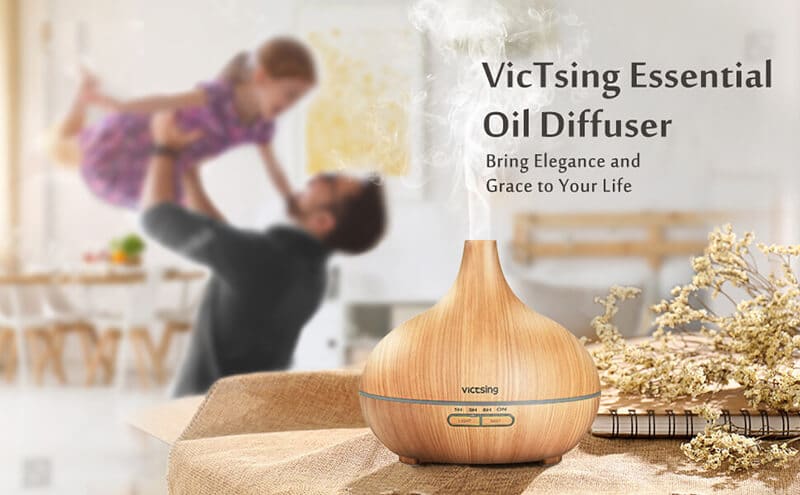
For aromatherapy purposes, diffusers are paired with essential oils.
Essential oil diffusers vaporize the essential oils, hence the aroma can be dispersed throughout the air.
Diffusers vary in many types, shapes, and sizes. Diffusers differ from humidifiers in that they are specifically designed to mix essential oils with water in a water tank and diffuse them.
Four types of essential oil diffusers in the market:


Ultrasonic (Ultrasonic Vibration)


Candle (Heat)


Evaporative (Wind/Fan)


Nebulizer (Force/Atomization)
In a word, diffusers are designed to vaporize mists with essential oils that aromatize the room area.
Pros of Diffusers
Provides an efficient way to make full use of essential oils
Depending on what oil you use, the mist absorbed by your skin can have a relaxing and soothing effect.
A great way to remove unpleasant scents and mites, keeping your home smelling absolutely lovely.
The cool mist generated from a diffuser can purify the air around the diffuser, reducing common bacteria
A diffuser can help with snoring because it eases the harshness of the air breathed in while sleeping.
Depending on what oil you use, the mist absorbed by your skin can have a relaxing and soothing effect.
A diffuser can work as a tiny humidifier, helping you breathe smoothly in dry winter.
Some researches show that a diffuser can reduce a certain type of bacteria and fungus in the home. Essential oils have antiviral, antifungal, and antioxidant properties. That is why diffusers can also reduce the number of bacteria and fungus in the room, therefore preventing health issues.
Depending on the essential oils, they purify the air you breathe and cater to your demands, which can range from relaxing your mind and helping sleep, to reducing stress and anxiety.
Take note that you’ll only benefit from diffusers when using the right essential oil.
Cons of Diffusers
Normally diffusers have a smaller water tank than a humidifier.
Some types of diffusers can be noisy.
Diffusers require distilled water, for the best benefits to your health.
The best diffusers usually cost a lot, but when used properly and in need, it always worths it.
Needs basic cleaning daily,
you can click here to find out how to clean a diffuser
What is a Humidifier?
A humidifier is a larger machine designed to keep a set level of moisture in the room area. Humidifiers help people who have issues that come along during dry weather. Many use one to treat symptoms of cold, flu, and sinus congestion.
Humidifiers are different from essential oils diffusers: Most humidifiers in today’s market do not support the mixing of essential oils for distribution in the air. Because most humidifiers on the market have plastic components, they are not compatible with essential oils.
A diffuser can disperse your essential oils, which makes it much easier for you to inhale it and your body to absorb it. A common humidifier can not work in a similar manner.
Note that it’s not recommended to use essential oils with a humidifier.
Pros of Humidifiers
Treating dry air by adding moisture in the form of warm mist.
By adding moisture, a humidifier benefits the lining of the nose.
It helps with respiratory problems, providing relief for those suffering from asthma and allergies.
A humidifier can operate with tap water.
Humidifiers are used to increase the moisture in the air. By regulating the humidity in the air, they help you breathe better and reduce skin dryness. Moreover, Humidifiers can reduce respiratory issues or flu-like symptoms, and alleviate cold symptoms by reducing dryness and irritation of the nose and throat. It adds moisture to the air to allow the skin and membranes to absorb a healthy level of moisture.
Proper moisture levels in your home can also prolong the life of the structure itself.
Dry wood can lose its shape and cause structural aging. Proper moisture content help prevents cracking of wooden furniture.
Cons of Humidifiers
Cleaning and maintenance on a regular basis are required.
Not specifically designed to be used with essential oils: humidifier can break down if operating with oils.
Some humidifiers are noisy when in operation.
Incapable in small space: too much moisture may damp your room.
Some units, especially the ones which release warm mist is not suitable if you have children and/or pets:
Boil water inside the humidifier can be dangerous to leave alone.
Most humidifiers are equipped with built-in filters for blocking bacteria or mites from the water. So it can be messy to clean the whole unit. Without proper maintenance, a humidifier becomes a breeding ground for germs and fungus, which are released into the atmosphere to enter our bodies. Who wants that really?
Why I can’t use oils with a humidifier? / Can I put essential oils in a humidifier
Most humidifiers (whether steam or cold mist) are not designed to vaporize essential oils. And there are even warnings to not put essential oils directly in the water reservoir because these oils will clog or damage the humidifier. Essential oils, particularly citrus ones, can break down the plastic components of this device, resulting in a reduction of the essential oils’ effectiveness.
Also, the oils will cause deformation of molded or synthetic parts such as rubber, plastic, and filters. And this can cause an annoying buildup, which can block the flow and lower the humidifier’s efficiency. If the buildup is not cleaned often, it may eventually burn out.
Moreover, the bigger problem is that those plastics may dissolve in oils and then spread into the air, resulting in damage to your health.
It’s better to get an essential oil diffuser that is designed to effectively disperse essential oils throughout your space.
Conclusion
Now you know the difference between a diffuser and a humidifier.
Whether you’re trying to de-stress, aid your immune system, or reduce dryness, diffusers and humidifiers provide various benefits to alleviate winter woes in different ways.
If you want to wind down and relax with aromatherapy when home, an essential oil diffuser is definitely for you. If you are looking for a way to distribute essential oils in the air, we recommend choosing a diffuser as an efficient tool.
However, if you’re sharing your space with other people, a humidifier may cover larger space needed to get humidified.
For newbies, We would recommend essential oil diffuser.
Because it can offer you aromatherapy, and also function as a tiny humidifier to some extent.
Whichever product you choose to purchase, make sure you research both the advantages and disadvantages of the device. You can visit our other blogs to find out what other consumers are finding the best addition to their home.